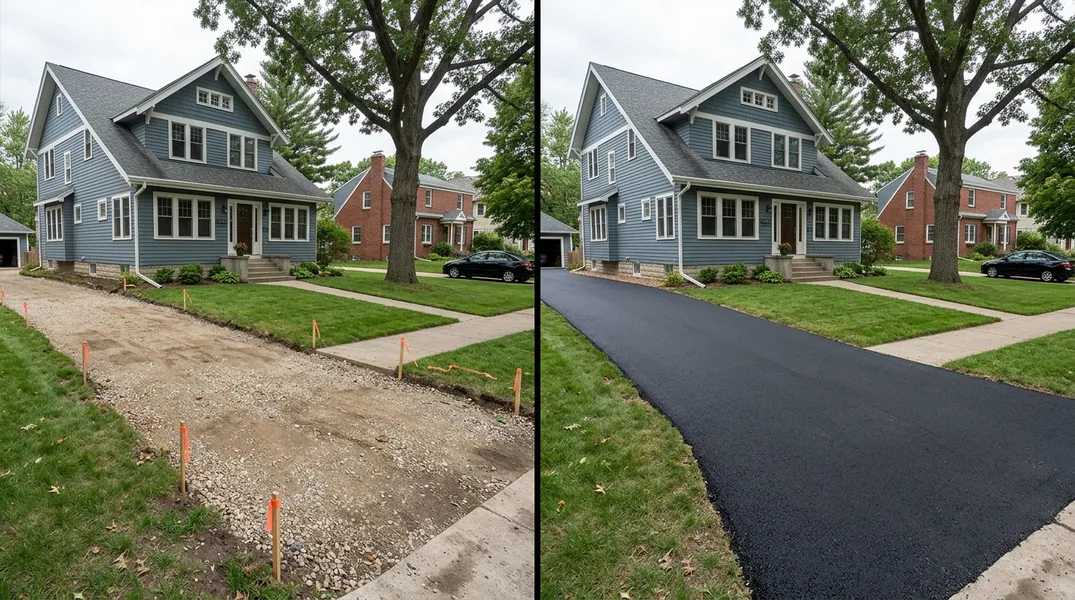
Why Driveway Material Matters in Madison's Climate
If you live in Madison, you know that winter isn't kind to driveways. The freeze-thaw cycle that defines Wisconsin winters puts tremendous stress on any surface you choose. Water seeps into small cracks, freezes, expands, and creates larger damage. This cycle repeats dozens of times each season, making material selection one of the most important decisions a homeowner can make.
Choosing the right driveway material isn't just about aesthetics or initial cost. It's about understanding how each option performs when temperatures drop below freezing, how it handles salt and de-icing chemicals, and how long you can realistically expect it to last before needing repairs or replacement. In this guide, we'll compare three popular driveway options and help you understand which one makes the most sense for your Madison home.
Asphalt vs. Concrete: The Head-to-Head Comparison
When homeowners debate driveway materials, the conversation almost always centers on asphalt versus concrete. Both are widely available, professionally installed throughout the region, and offer distinct advantages and drawbacks. Understanding the differences between these two options is essential for making an informed decision that you won't regret in five or ten years.
Asphalt driveways are made from a mixture of aggregate (crushed stone and sand) bound together with bitumen, a petroleum-based binder. Asphalt Driveway Paving & Installation is popular in Madison because it's relatively affordable, quick to install, and provides good traction in winter conditions. The dark surface also melts snow faster than lighter-colored materials, which is a genuine advantage during Wisconsin winters. However, asphalt requires regular maintenance, including seal coating every two to three years and prompt Pothole Repair & Asphalt Patching to prevent small issues from becoming major problems.
Concrete driveways are made from Portland cement, water, and aggregates that cure into a hard, durable surface. Concrete typically lasts longer than asphalt and requires less frequent maintenance. It doesn't need seal coating, and you won't deal with potholes the way you do with asphalt. The downside? Concrete is more expensive upfront, and it's particularly vulnerable to the freeze-thaw cycle that defines Madison winters. Water infiltrates concrete through microscopic pores, and when that water freezes, it expands and causes spalling (surface flaking) and cracking. Road salt accelerates this deterioration. Additionally, concrete can become slippery in winter conditions, and snow removal equipment can damage the surface more easily than with asphalt.
When comparing asphalt vs concrete driveway options, the choice often comes down to your budget, maintenance preferences, and how much you value longevity versus lower upfront costs. Neither material is perfect for Wisconsin's climate, but asphalt generally handles our winters more gracefully.
Asphalt Driveway Lifespan: What to Expect in Madison
One of the most common questions homeowners ask is how long their driveway will last. The asphalt driveway lifespan depends on several factors, including the quality of the initial installation, climate conditions, traffic volume, and how well you maintain it. In Madison, where winters are harsh and freeze-thaw cycles are frequent, you can typically expect a well-maintained asphalt driveway to last 15 to 20 years.
This lifespan assumes you're proactive about maintenance. Seal coating your driveway every two to three years protects the asphalt from UV rays, water infiltration, and chemical damage. Filling small cracks promptly prevents them from expanding into larger problems that require expensive repairs. Removing snow and ice carefully, without using metal shovels that gouge the surface, also extends your driveway's life. If you neglect maintenance and allow cracks to spread unchecked, you might only get 10 to 12 years before needing major repairs or replacement.
Concrete driveways, by contrast, often last 25 to 30 years in ideal conditions, but in Madison's freeze-thaw environment, many concrete driveways show significant deterioration within 15 to 20 years. This reality surprises many homeowners who assume concrete automatically outlasts asphalt. The harsh Wisconsin winters level the playing field considerably. If you're considering an asphalt over concrete driveway installation, that's actually a smart strategy for extending the life of a failing concrete base. Madison Asphalt Paving can discuss this option with you when you request a free estimate.
Tar and Chip Driveways: A Middle Ground Option
Between asphalt and concrete lies a third option that's gaining popularity in rural and suburban areas around Madison: tar and chip driveways. Also called chip seal or macadam, this option consists of a tar or asphalt binder sprayed onto a gravel base, then topped with stone chips that are pressed into the surface. The result is a rustic, attractive appearance that many homeowners find appealing.
Tar and chip driveways offer some genuine advantages for Wisconsin homeowners. They're less expensive than both asphalt and concrete, they provide good traction in winter, and they have a distinctive aesthetic that appeals to rural properties. They're also more environmentally friendly than traditional asphalt, using recycled materials in many cases. However, tar and chip driveways have significant drawbacks, especially in harsh climates. They require annual maintenance, including reapplication of tar and fresh stone chips. The surface is softer than asphalt, so it's more susceptible to rutting and displacement from heavy traffic or aggressive snow removal. In freeze-thaw environments, tar and chip surfaces tend to deteriorate faster than quality asphalt. Most tar and chip driveways last only 7 to 10 years before requiring major work.
For most Madison homeowners, tar and chip is best suited to low-traffic applications like long rural driveways or decorative parking areas. If you need a durable surface that will handle regular use and Wisconsin winters, asphalt remains the more practical choice.
Winter Performance: How Each Material Handles Madison's Freeze-Thaw Cycles
The defining characteristic of Madison winters is the freeze-thaw cycle. Temperatures fluctuate above and below freezing multiple times throughout the season, and this constant expansion and contraction is brutal on driveways. Understanding how each material responds to these conditions is crucial for making your decision.
Asphalt's dark color absorbs solar heat, which means it warms up faster than lighter materials and sheds snow and ice more readily. This is a genuine advantage during spring thaws and sunny winter days. Asphalt is also flexible, meaning it can expand and contract slightly without cracking. However, if water penetrates through cracks to the base layer beneath, freeze-thaw damage can occur. This is why seal coating is so important for asphalt driveways in Wisconsin. A well-sealed asphalt surface sheds water effectively and prevents infiltration that leads to base failure.
Concrete, unfortunately, is rigid and porous. It cannot flex when water inside it freezes and expands, so it cracks and spalls. Road salt, commonly used on Madison streets and driveways, accelerates concrete deterioration by drawing moisture into the material and then freezing it. Many concrete driveways in Wisconsin show visible damage within 10 to 15 years of installation. The light color of concrete also means it stays colder longer, which can be a disadvantage during freeze-thaw cycles.
Tar and chip surfaces are softer and more susceptible to damage from freeze-thaw cycles than asphalt. The binder becomes brittle in extreme cold and soft in summer heat, leading to faster deterioration. In Madison's variable winter climate, tar and chip surfaces often need repair or resealing annually.
Asphalt Driveway Paving & Installation Cost in Madison: What to Budget
Cost is understandably a major factor in your decision. Asphalt Driveway Paving & Installation typically costs between $3 and $5 per square foot, depending on site conditions, local labor costs, and material quality. For a typical 2-car driveway (about 500 square feet), you can expect to pay $1,500 to $2,500 for professional installation. Concrete costs more upfront, usually $8 to $12 per square foot, making a similar concrete driveway cost $4,000 to $6,000. Tar and chip is the most affordable option at $1 to $2 per square foot, but remember that this lower initial cost comes with higher maintenance expenses over time.
When evaluating pricing, consider the total cost of ownership, not just the installation price. An asphalt driveway might cost less initially, but you'll invest in seal coating and repairs over its lifespan. A concrete driveway costs more upfront but requires less maintenance, though freeze-thaw damage in Madison can be expensive to repair. Tar and chip saves money initially but deteriorates quickly, requiring frequent maintenance and eventual replacement.
Madison Asphalt Paving provides transparent pricing and can explain the total cost of ownership for each option. If you're ready to move forward with an asphalt driveway or want to explore Asphalt Resurfacing & Overlay for an existing driveway, contact us at (608) 292-2500 or request a free estimate online.
Making Your Decision: Which Driveway Material is Right for You?
After comparing these three options, the best choice for most Madison homeowners is asphalt. It offers the best balance of affordability, durability, winter performance, and maintenance requirements for Wisconsin's climate. Asphalt handles freeze-thaw cycles better than concrete, lasts longer than tar and chip, and costs less upfront than concrete while offering comparable longevity in our harsh winters.
If you have a low-traffic rural property and appreciate rustic aesthetics, tar and chip might appeal to you, but be prepared for regular maintenance. If you want the absolute longest lifespan and don't mind higher upfront costs and potential freeze-thaw damage, concrete is an option, though it's not ideal for Madison's climate. For most homeowners, Asphalt Driveway Paving & Installation delivers the best value and performance.
Ready to get started? Madison Asphalt Paving has been serving Madison homeowners for years, and our team understands the unique challenges of Wisconsin driveways. Whether you're installing a new driveway, replacing an existing one, or considering Driveway Repair to extend your current surface's life, we're here to help. Call us today at (608) 292-2500 to discuss your project, or visit our website to request a free estimate.
Looking for a professional asphalt paving contractor in Madison? Madison Asphalt Paving responds fast for all your asphalt paving needs.
Get a Free Quote