Understanding Madison's Unique Soil Composition
Madison sits in a region shaped by the last ice age, and that geological history directly impacts every driveway built here. The glacial till and lake soils beneath our properties are not the same as soils found in other parts of the country. Glacial till, left behind by retreating glaciers thousands of years ago, consists of a dense mixture of clay, silt, sand, and gravel. Lake soils, deposited when glacial meltwater formed ancient lakes across the region, tend to be finer and more moisture-retentive. Understanding these soil types is essential for homeowners who want their driveways to last.
When asphalt is laid on top of these soils without proper preparation, problems emerge. The clay content in glacial till expands when wet and contracts when it dries, creating movement beneath the surface. Lake soils, which retain moisture longer, can trap water that freezes and thaws with seasonal temperature changes. This freeze-thaw cycle is one of the most destructive forces on asphalt in Wisconsin. A properly engineered driveway base accounts for these soil characteristics, which is why professional Asphalt Driveway Paving & Installation requires more than just pouring asphalt on dirt.
Frost Heave and Freeze-Thaw Cycles: Why Madison Driveways Suffer
Frost heave is the upward movement of soil caused by the expansion of ice as it forms in the ground. In Madison, where winter temperatures regularly drop below freezing and spring thaws arrive suddenly, frost heave is a constant threat. When water in the soil freezes, it expands by about 9 percent. If that soil is trapped beneath an asphalt surface with nowhere to go, the pressure forces the pavement upward. Homeowners notice this as buckling, cracking, or the formation of raised sections in their driveways. Once frost heave damage begins, it accelerates quickly because cracks allow more water to infiltrate the base layers.
The freeze-thaw cycle doesn't stop after one winter. Each year that follows, if the driveway base isn't properly designed, the damage worsens. Water seeps into small cracks, freezes, expands, and creates larger cracks. By the third or fourth winter cycle, a driveway that seemed fine may require Driveway Repair or replacement. This is why Madison Asphalt Paving emphasizes proper base preparation during the initial installation. A gravel or recycled asphalt base layer, compacted to the right density and thickness, allows water to drain away from the asphalt surface rather than accumulating beneath it. Drainage is not a luxury in Madison; it is a necessity.
Pothole Repair and Asphalt Patching: Addressing Soil-Related Damage
Pothole Repair & Asphalt Patching becomes necessary when frost heave, poor drainage, and soil movement have already compromised the surface. Potholes typically form when water penetrates the asphalt, weakens the base, and then the surface collapses under traffic. In Madison's climate, this sequence happens reliably every spring as the ground thaws and moisture moves through the soil layers. The pothole you see is not the real problem; it is a symptom of what is happening beneath the surface. The soil base has shifted, settled, or become saturated, and the asphalt above has failed as a result.
When Madison Asphalt Paving performs pothole repair, we do more than fill the hole with new asphalt. A professional repair removes the damaged asphalt and base material, inspects the soil conditions, and rebuilds the section with proper compaction and drainage. A quick patch that ignores the underlying soil problem will fail again within months. This is why some homeowners experience recurring potholes in the same locations year after year. The soil composition beneath those spots may be particularly prone to moisture retention or settling, requiring either targeted repairs or consideration of whether a full Asphalt Resurfacing & Overlay makes more economic sense.
When to Repair or Replace Your Driveway: A Soil-Based Assessment
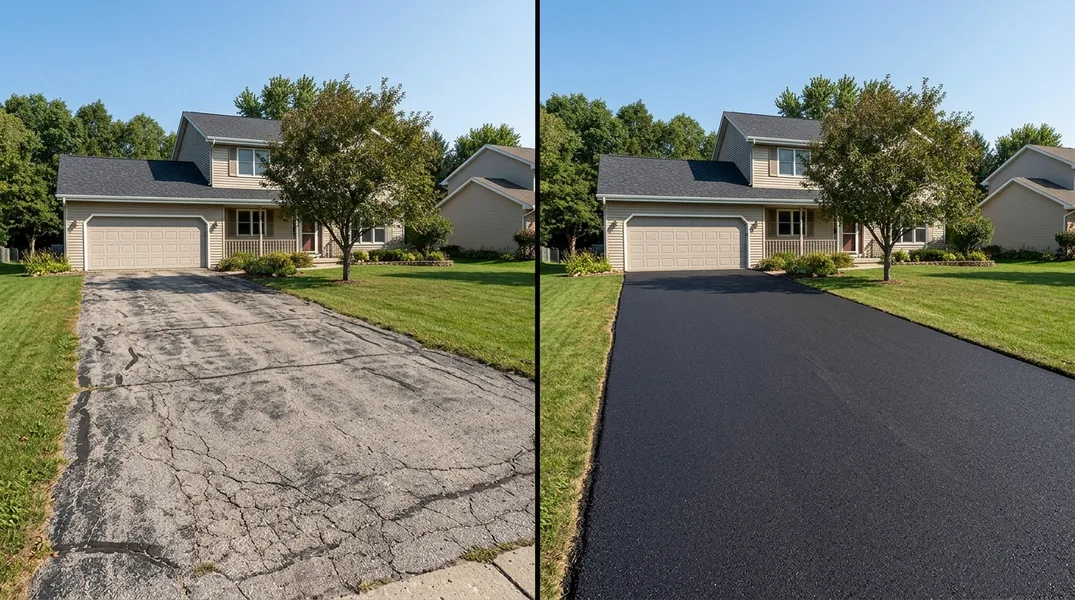
The decision to repair or replace an asphalt driveway depends partly on the severity of damage and partly on the underlying soil conditions. If your driveway shows widespread cracking, multiple potholes, or significant frost heave, the soil base may have already failed. Continuing to patch a fundamentally compromised base is throwing money after good money. A free estimate from Madison Asphalt Paving includes a visual assessment of your driveway's condition and an honest evaluation of whether repair or replacement makes sense for your situation and budget.
Glacial till and lake soils in the Madison area can support a durable driveway, but only if the driveway is designed with these soils in mind. A new driveway built on a properly prepared base with adequate drainage will outperform a repaired one that sits on a damaged or poorly draining foundation. If your driveway is less than ten years old and showing significant damage, replacement may be the better choice. If it is older and showing isolated damage, targeted repairs combined with improved surface drainage may extend its life. The key is understanding what is happening beneath the surface, and that requires professional evaluation.
Proper Base Preparation: The Foundation for Durability in Madison
The difference between a driveway that lasts fifteen years and one that lasts thirty comes down to base preparation. In Madison, where soil conditions are challenging, the base layer is not an afterthought. A quality driveway base should be four to six inches of compacted gravel or recycled asphalt, with proper slope to encourage water drainage away from the structure. The slope should be subtle, typically one-quarter inch per foot, enough to move water without being noticeable. Beneath the gravel base, the native soil should be graded and compacted as well, because an unstable subgrade will eventually cause the entire driveway to settle unevenly.
Madison Asphalt Paving uses proven techniques for base preparation that account for local soil conditions. We compact materials in lifts, test compaction density to ensure specifications are met, and verify that drainage patterns will direct water away from the asphalt. These steps add to the initial cost, but they prevent the far more expensive problem of premature failure. When you invest in Asphalt Driveway Paving & Installation done right, you are investing in decades of reliable performance, not just a few years of trouble-free use.
Getting Professional Help: Asphalt Driveway Paving & Installation Near Me
If you are a Madison homeowner dealing with driveway damage, frost heave, or simply wondering whether your current driveway will survive another Wisconsin winter, professional guidance is invaluable. Madison Asphalt Paving has served the community for years, understanding the specific challenges that glacial till and lake soils create. We can evaluate your driveway, explain what is happening beneath the surface, and recommend the most cost-effective solution for your property. Whether you need Pothole Repair & Asphalt Patching, a complete replacement, or just an honest assessment, we are here to help.
Contact Madison Asphalt Paving today at (608) 292-2500 or visit our website at https://madison-paving.com to request a free estimate. We serve Middleton, Fitchburg, Sun Prairie, and surrounding areas. Let us show you how proper understanding of Madison's soil conditions leads to driveways that truly last.
Looking for a professional asphalt paving contractor in Madison? Madison Asphalt Paving responds fast for all your asphalt paving needs.
Get a Free Quote